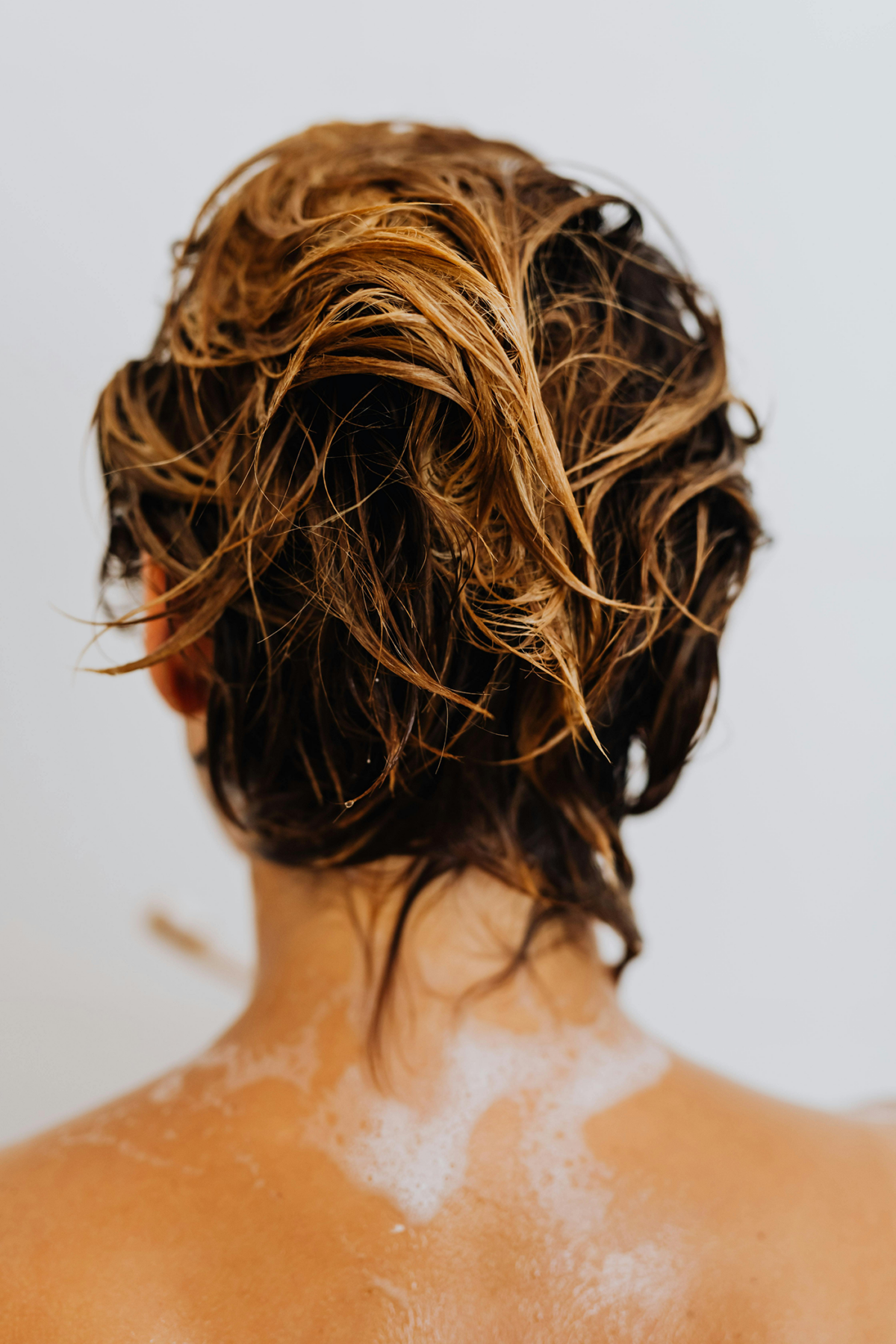
Apple Cider Vinegar for Hair: a simple ritual for shine, softness & scalp care

There are some ingredients that feel simple and familiar — not only a staple in the pantry, but in our self-care rituals too. Apple Cider Vinegar is one of them.

It’s one of those softly powerful ingredients that sits at the crossroads of old-world wisdom and modern routine.

And when you use it gently, it can become a small moment of reset: a fresher-feeling scalp, lighter-feeling roots, hair that feels softer, and that subtle kind of shine that looks like health — not effort.¹

If your scalp has been feeling a little unsettled, or your hair feels heavy and dull, this is for you.

Why Apple Cider Vinegar can be so lovely for hair

Your scalp is skin — and like all skin, it has a delicate balance.

One of the quiet ways skin protects itself is through a naturally slightly acidic surface, often called the “acid mantle.” This surface acidity supports the skin barrier and plays a role in the skin’s natural protective environment.²

Apple Cider Vinegar (ACV) contains acetic acid, and acetic acid has been studied for its antimicrobial activity in research settings.³ This isn’t the same as saying Apple Cider Vinegar is a medical treatment — it isn’t — but it helps explain why so many people love it as an occasional rinse when their scalp feels weighted or lacklustre.

And then there’s the feel of it.

Hair fibres respond to pH, and research shows that human hair can equilibrate across acidic and alkaline environments — meaning pH can influence hair fibre condition and behaviour.¹

Because of this, many people notice softer-feeling hair and smoother movement after a gentle pH-focused rinse like diluted ACV

In real life, this can look like:

  • soft-feeling hair¹
  • hair that feels more manageable¹
  • less dullness
  • less “film” on the hair
  • a little more natural shine¹
  • a scalp that feels cleaner and fresher

Choosing the right ACV (this part really matters)

If you’re going to put something on your scalp, it should be clean, authentic, and made with care.

Look for raw, unfiltered and unpasteurised Apple Cider Vinegar with ‘The Mother’ — the naturally cloudy culture of beneficial bacteria and enzymes found in traditional ACV. Barnes Naturals Organic Apple Cider Vinegar is made in this way.

This matters because overly processed vinegars can lose the very characteristics that make ACV feel like such a nourishing, “alive” ingredient in the first place.

A gentle guide to: Apple Cider Vinegar for hair


Before you begin, it’s important to remember: ACV should never feel harsh.

It works best when it’s used gently and intentionally; Apple Cider Vinegar is acidic — and undiluted vinegar has been reported to irritate skin in rare cases.4

So: always dilute. Always rinse thoroughly. Always listen to your scalp.

Ritual 1: The Soft Shine Rinse

(best place to start)


This is the easiest and most universal way to use ACV — and the one you’ll see echoed in many ACV rinse products.

You’ll need

  • 1 tablespoon Apple Cider Vinegar
  • 1 cup (250 ml) water

How to do it

  1. Shampoo as normal.
  2. In a cup or squeeze bottle, mix ACV with water.
  3. Slowly pour through your scalp and hair.
  4. Massage gently into your scalp and roots with fingertips (no nails).
  5. Let it sit for 1–3 minutes.
  6. Rinse very well.
  7. Condition ends if needed.

We recommend keeping to a brief few minutes, allowing the Apple Cider Vinegar rinse to do its work before rinsing thoroughly.

How often

  • Once a week if your scalp gets oily or you notice buildup easily
  • Every 2 weeks if your scalp is normal or dry

(note: a gentle. brief pH-targeted rinse like this aligns with how acidic rinses are commonly discussed in cosmetic haircare research contexts.)¹

Ritual 2: The Roots Reset Spray

(when hair feels heavy at the scalp)


If you’ve ever watched hair influencers talk about Apple Cider Vinegar, this is often the vibe: a simple bottle, a gentle scalp mist, and that fresh-root feeling.

A common dilution method requires around 1 part ACV to 4–5 parts water for a scalp-refreshing rinse approach.

You’ll need

  • a spray bottle
  • 1 part ACV
  • 4–5 parts water

How to do it

  1. After shampooing, squeeze excess water out.
  2. Spray onto the scalp in sections.
  3. Massage gently.
  4. Leave for 1–2 minutes.
  5. Rinse well.
  6. Condition ends.

This is especially nice if your hair tends to have oily roots but drier ends — because you can focus the ACV on the scalp without overdoing it through the lengths.

Ritual 3: The Final Rinse for dullness

(hard water, product film, “flat” hair)


Some weeks, hair just doesn’t behave.

It feels coated. It looks dull. It doesn’t move the way it normally does.

This is the week for a very light rinse.

Try

  • 1 teaspoon ACV
  • 1 cup water

Pour through the lengths, rinse lightly, then condition ends.

(This type of light acidic rinse is similar in concept to clarifying cosmetic products that aim to address residue while respecting hair fibre pH.)¹

What you might notice (and when)

This isn’t a routine that needs months before it feels worthwhile.

For many people, the difference is immediate — not dramatic, but unmistakable.

After your first rinse you may notice:

  • your scalp feels cleaner and lighter
  • your roots feel less weighed down
  • your hair feels softer when it dries
  • your shine looks more natural (less oily, more reflective)¹

And over time, keeping your scalp feeling fresh can make a noticeable difference— which matters, because scalp barrier and microbiome health are deeply connected to pH and the acid mantle.²

A few gentle cautions

(because your scalp deserves tenderness)


Skip ACV for now if:

  • your scalp is broken, scratched, or inflamed
  • you’re having an eczema or psoriasis flare
  • your hair is extremely dry or damaged

And if you do try it:

  • patch test first
  • start with a weaker dilution
  • avoid eyes completely
  • rinse thoroughly
  • don’t leave it on for long

We encourage you to be gentle and kind with your self-care, and mindful to your body’s holistic needs when introducing new rituals.

A closing note

Haircare doesn’t have to feel like a project.

Sometimes it can be as simple as warm water, clean ingredients, and a few quiet minutes where you’re taking care of yourself — slowly, lovingly, intentionally.

Apple Cider Vinegar has been used for generations for a reason. It’s humble. It’s grounding. And when you choose a raw, unfiltered ACV with ‘The Mother’, you’re choosing something that feels closer to nature — and closer to ritual.

References
  1. Ehle A, Laux P, Keck CM. Human hair and pH: fibre equilibration in acidic and alkaline environments. Colloids and Surfaces A: Physicochemical and Engineering Aspects. 2023. Available from: ScienceDirect.

    2. Korting HC, Schöllmann C, White RJ. Management of the skin barrier: skin pH and microbiome considerations. Journal of Investigative Dermatology (review/overview). 2024. Available from: ScienceDirect.

    3. Nagoba BS, Selkar SP, Wadher BJ, Gandhi RC. Acetic acid treatment of pseudomonal wound infections – a review. Journal of Infection and Public Health. 2013. Available from: ScienceDirect.

    4. Bashir SJ, et al. Chemical burn from topical apple cider vinegar use: case report. Journal of the American Academy of Dermatology (JAAD). 2011.